Best Kitchen Organization Ideas for Small Kitchens With Too Much Stuff
This may contain affiliate links: full affiliate disclosure

When you have a small kitchen, having “too much stuff” can feel like a daily battle.
There’s a pan you can’t reach, containers falling out of a cabinet, and that one drawer you’re almost afraid to open.
You put a few things away.
Then you realize there’s nowhere left to put the rest.
And then you stop.
The problem isn’t always the amount of stuff you own. Sometimes the real problem is that your kitchen isn’t using its available space in a way that works for all that stuff.
That’s where smart small kitchen organization ideas can help. Instead of trying to squeeze everything into the same cabinets, look for unused areas, change how bulky items are stored, and create simple systems for the things that tend to create the most clutter.
These best kitchen organization ideas for small kitchens are especially useful when your kitchen is already full and you need practical ways to make room without making the space harder to use.
1. Organize Your Kitchen Around What You Actually Use

When there’s too much stuff in a small kitchen, giving every item equal storage priority doesn’t make much sense. Everyday plates, pans, glasses, and cooking tools should be easiest to reach, while things you only use occasionally can move to less convenient areas. Think about what you grab every morning, what you use for dinner, and what comes out only a few times a year. Then arrange your cabinets around those habits. This small change can make small kitchen organization feel much less frustrating because the things you need most aren’t buried underneath things you barely touch.
2. Make One Cabinet a “Most-Used” Cabinet

If you constantly open several cabinets while preparing a meal, try creating one cabinet for the items you reach for most often. Keep everyday cookware, basic dishes, frequently used utensils, and other essentials in one convenient area. It doesn’t have to contain everything, and it doesn’t need to look perfect. The goal is to reduce unnecessary movement around a small kitchen. When you’re working out how to organize a small kitchen with too much stuff, having a central everyday zone can make the room feel much more manageable.
3. Turn the Cabinet Doors Into Storage

The inside of a cabinet door is easy to ignore, but it can be surprisingly useful. A small adhesive organizer or over-the-door rack can hold measuring spoons, spice packets, pot lids, cutting boards, or wraps, depending on the cabinet and the product you choose. Amazon has many inexpensive cabinet-door organizers in different sizes, so you can usually find one that works with your setup. Check the door clearance before installing anything, especially around shelves and hinges. A few inches of extra storage here can make a crowded kitchen feel noticeably less cramped.
4. Use a Pull-Out Organizer for Heavy Cookware
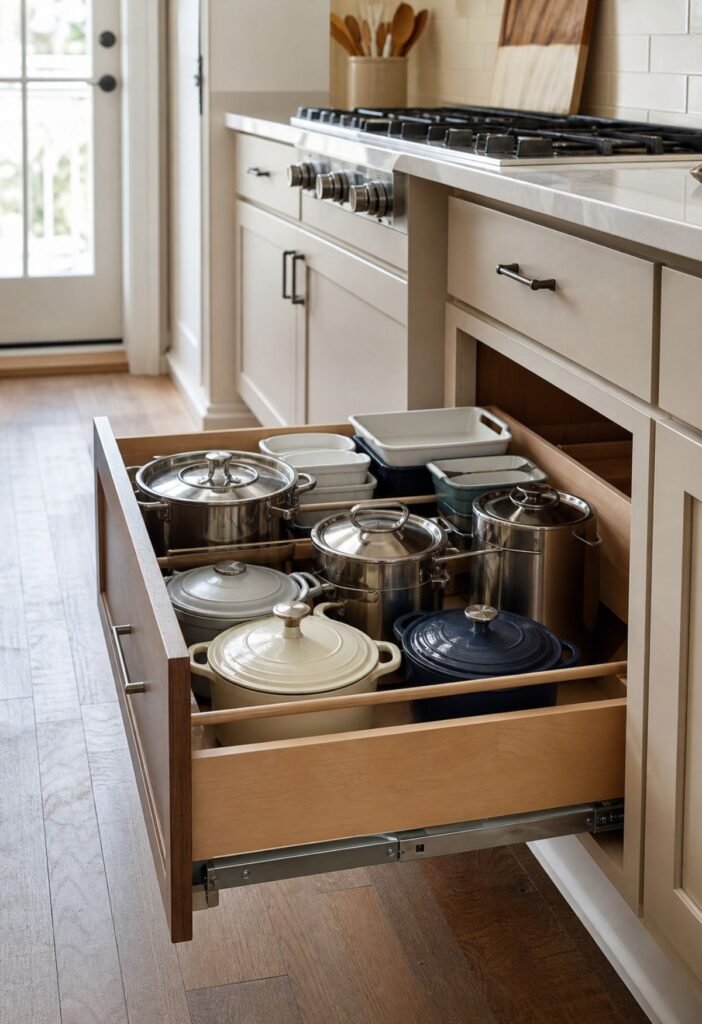
Heavy Dutch ovens, casserole dishes, and large cookware can become difficult to manage when they’re stacked deep inside a lower cabinet. A pull-out cabinet organizer lets you bring those items toward you instead of reaching into a dark pile. It also means you can use the back portion of the cabinet without forgetting what is stored there. Look for a sturdy model designed for the weight you plan to store. For kitchens with limited cabinet space, making deep storage accessible can be just as valuable as creating new storage.
5. Give Produce Its Own Home

Potatoes, onions, garlic, bananas, and other produce can slowly take over a small kitchen counter. Instead of letting them collect wherever there is room, give them a defined storage area using ventilated bins, baskets, or a compact produce rack. Keep items that need airflow in suitable containers rather than sealing them inside airtight boxes. If you don’t have enough counter space, a pantry shelf or another appropriate storage area may work better. The important part is simply getting loose produce out of random piles.
6. Use a Narrow Drawer Organizer for Utensils

A standard utensil tray often wastes space because the compartments are too large or poorly shaped for your actual collection. In a small kitchen, use a narrow modular organizer that lets you create compartments based on the utensils you own. Keep cooking spoons together, small tools together, and specialty pieces elsewhere. Don’t automatically give every utensil its own section. Grouping similar items can leave more room while still keeping the drawer easy to use.
7. Give Water Bottles Their Own Storage Area

Reusable water bottles are bulky and awkward, especially when several people in the household have one. Instead of letting them roll around in a cabinet, create a dedicated section for them using a bottle organizer or a sturdy bin. Store bottles upright when possible and keep lids together if they are removable. This prevents bottles from taking over shelves meant for dishes or pantry food. It’s a surprisingly useful solution when you have lots of stuff in a small kitchen.
8. Turn an Unused Corner Into a Functional Station

Small kitchens often have one awkward corner where nothing seems to fit properly. Rather than filling it with random items, give it one clear purpose. It could become a small beverage area, a baking corner, or a home for frequently used kitchen accessories. Use a compact freestanding shelf or appropriately sized storage piece if necessary, but avoid filling the area just because you can. The best kitchen organization ideas make awkward spaces useful without making the room feel even more crowded.
9. Use Shelf Risers Inside Crowded Cabinets

When plates or cans are stacked on top of each other, you usually end up using only the bottom half of a cabinet shelf comfortably. A simple shelf riser creates another level so smaller items can sit above larger ones. You can use one for mugs, bowls, plates, canned food, or even small appliances. This is one of those best kitchen organization ideas for small kitchens that doesn’t require changing the cabinets at all. You’re simply using the vertical space that was already there. If you can’t see an item easily, though, don’t pack the shelf too tightly.
10. Store Large Serving Pieces Somewhere Less Convenient

Large platters, oversized bowls, holiday dishes, and special serving pieces can consume prime cabinet space even though they’re rarely used. Move these items to the highest suitable shelf, the back of a deep cabinet, or another safe storage location. Keep the pieces you use every week closer to the front. This doesn’t mean getting rid of the large items you love. You’re simply matching storage space with how often each item earns its place there.
11. Use a Small Freestanding Pantry for Overflow

If your kitchen cabinets are completely full but you have a little unused wall or floor space, a narrow freestanding pantry can give overflow items a dedicated home. Use it for dry foods, backup supplies, snacks, or kitchen items that don’t need to be beside the stove. Choose a unit that is narrow enough to preserve your walking space. This can be especially helpful when you’re trying to figure out how to maximize storage in a small kitchen without replacing the existing cabinets.
12. Use a Corner Cabinet Insert

Corner cabinets can hold a lot, but the back corners are notoriously difficult to reach. A fitted corner insert or rotating corner system can make that space easier to access. Use it for bottles, cookware, dishes, or other items that currently disappear into the back. Measure carefully because corner cabinet dimensions vary. The point is to make the awkward part of the cabinet usable rather than letting valuable storage become a dead zone.
13. Use a Pull-Out Trash Can to Free Floor Space

If your trash can sits beside the cabinet and constantly gets in the way, an under-cabinet pull-out bin can make the floor area feel much more open. These systems fit inside a suitable cabinet and slide forward when needed. Before installing one, check the cabinet dimensions and make sure plumbing or other hardware isn’t blocking the space. This isn’t about adding more things to your kitchen. It’s about moving an unavoidable item into a space that was already there.
14. Give Baking Supplies One Compact Home

Flour, sugar, baking powder, cupcake liners, rolling tools, decorating supplies, and baking pans can quickly spread through a small kitchen. Instead of storing each item wherever you find an empty spot, create one baking zone. It can be a single cabinet shelf, drawer, or compact pantry section. Keep the things you use together rather than organizing them across the kitchen. When baking supplies have one home, you’re less likely to create temporary piles on the counter.
15. Use Under-Cabinet Space for Everyday Items

The area underneath upper cabinets is usually occupied by countertops, but a small portion can sometimes hold a low-profile storage solution without interfering with your workspace. Depending on the kitchen, this could be used for paper towels, frequently used mugs, lightweight utensils, or other small items. Keep the installation shallow so you don’t lose valuable prep space or bump into it while cooking. It’s a good option when cabinets are full but you still have a little vertical room above the counter.
16. Add a Slim Rolling Cart to an Empty Gap

That narrow space beside the refrigerator or between cabinets may not look useful, but a slim rolling cart can turn it into practical storage. Look for a narrow cart with multiple shelves that can hold spices, cooking oils, canned goods, snacks, or cleaning supplies. Because it rolls out, you can actually reach the items instead of creating another dark corner where things disappear. This can be especially helpful for small kitchen storage ideas for lots of stuff when your cabinets are already packed. Just measure the gap first. A cart that is even slightly too wide will become more annoying than useful.
17. Create a Dedicated Container for Kitchen Gadgets

Small kitchen gadgets are easy to underestimate. One peeler isn’t a problem, but add a garlic press, citrus squeezer, ice cream scoop, avocado tool, bottle opener, and several other gadgets, and suddenly one drawer is full. Put less frequently used gadgets together in one container or drawer section instead of spreading them throughout the kitchen. Keep your everyday tools separate. That way, the gadget collection has a boundary, and it can’t slowly take over every available space.
18. Organize Food by Package Shape

Pantry shelves become difficult to manage when tall boxes, small packets, bags, and cans are mixed together without any logic. Try grouping similar package shapes together. Keep cans with cans, boxes with boxes, and flexible packets in a contained area. You can then use the shelf height more efficiently instead of having short items trapped behind tall ones. This is one of those small kitchen organization ideas that save space simply because you’re arranging items according to how they physically fit.
19. Use the Space Above the Cabinets

The area above kitchen cabinets can hold items that you need but rarely reach for. Use attractive, sturdy storage boxes or baskets for things such as seasonal kitchen linens, special cookware, extra serving supplies, or backup items. Keep heavier pieces off high shelves and avoid storing anything that could become difficult or unsafe to retrieve. This turns otherwise unused vertical space into overflow storage while keeping your everyday cabinets available for the things you use constantly.
20. Store Appliances Based on Their Size

Large appliances can create more clutter than their number suggests. Instead of placing them wherever there happens to be room, group appliances by size and frequency of use. Keep the bulky machines you rarely use toward the back or in lower storage, while smaller daily appliances stay accessible. If two appliances have similar functions, consider whether both need to occupy valuable kitchen space. This approach helps prevent a small kitchen from feeling like an appliance warehouse.
21. Store Pots Inside Larger Pots

Pots can take up a ridiculous amount of cabinet space when they’re stored separately. Instead, nest smaller pots inside larger ones whenever their shapes allow it, then keep the lids together in a nearby spot. You may lose a little convenience when grabbing the largest pot, but you’ll gain a lot of cabinet space. This works particularly well for saucepans and similarly shaped cookware. If your collection contains lots of different shapes, group only the pieces that naturally nest rather than forcing them together.
22. Make Storage Rules for New Kitchen Items

A small kitchen can stay organized only if new stuff doesn’t constantly overwhelm the system. Before bringing home another pan, gadget, mug, or container, decide where it will live. If there isn’t a suitable place, something similar may need to move out or be stored elsewhere. You don’t have to follow a strict minimalist lifestyle. The simple rule is that every new item needs a realistic home. That’s what keeps how to organize a cluttered small kitchen from becoming a project you have to repeat every few months.
FAQs
1. How do you organize a small kitchen with too much stuff?
Start by organizing your kitchen around the items you use most often. Keep everyday cookware, dishes, utensils, and appliances within easy reach, while rarely used items can go in higher or less convenient storage. Use space-saving solutions such as shelf risers, cabinet-door organizers, rolling carts, corner inserts, and dedicated storage zones to make better use of the space you already have.
2. How can I maximize storage in a small kitchen?
Make use of overlooked areas such as cabinet doors, awkward corners, the space above cabinets, under-cabinet areas, and narrow gaps between appliances and cabinets. You can also maximize existing cabinet space by nesting pots, using shelf risers, grouping food by package shape, and adding compact organizers.
3. What should I do when my small kitchen has no more storage space?
Instead of immediately adding more cabinets, look for unused areas and reorganize the storage you already have. Move rarely used serving pieces to less convenient spaces, create dedicated zones for items such as baking supplies and kitchen gadgets, and consider a slim rolling cart or small freestanding pantry for overflow storage. Also, give every new kitchen item a realistic place before bringing it into the kitchen.
Final Thoughts
Having a small kitchen with too much stuff doesn’t mean you have to live with overflowing cabinets and crowded counters.
You just need to make the space work harder. Look at the awkward corners. Look at deep cabinets. Look at the items that keep getting moved around because they don’t have a proper home.
Those are usually the real trouble spots. Start with one. You don’t need to reorganize the entire kitchen in a single day. A better cookware system, a dedicated bottle zone, or one useful overflow shelf can be enough to make everyday life easier.
And once everything has a reasonable place to go, keeping the kitchen organized becomes much less exhausting.It won’t look perfect all the time.That’s fine.It just needs to work.