
Pantry Organization Ideas for a Stress-Free Holiday Season
This post may contain affiliate links: full affiliate disclosure
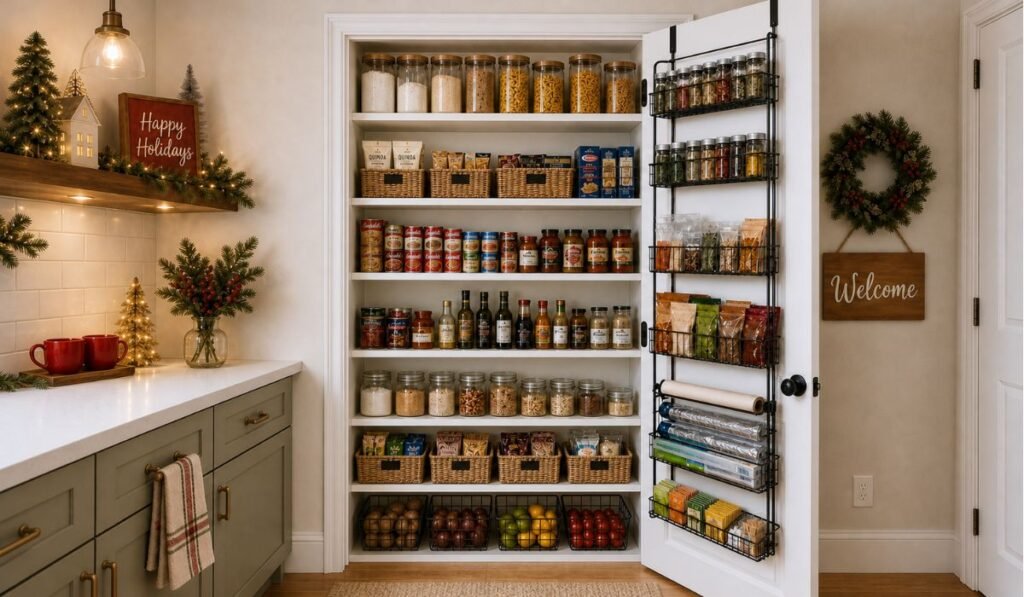
You know that moment when you’re preparing for a holiday dinner, the oven is already running, and you can’t find the cinnamon you bought last week? You move a bag of flour, check behind the cereal boxes, and somehow end up making an even bigger mess.
And the worst part? You still have groceries to put away.
The holiday season often means more cooking, more baking, and more food in the house than usual. Even a pantry that normally works fine can start feeling crowded when you’re buying ingredients for guests, family dinners, and weekend treats.
That’s where a few thoughtful pantry organization ideas can help. You don’t need to empty every shelf or spend your weekend shopping for matching containers. Sometimes, the real solution is changing where things go, making better use of forgotten spaces, and preparing your pantry for the way you’ll actually use it.
These ideas focus on practical changes that make holiday cooking easier, whether you have a walk-in pantry, a small kitchen cabinet, or just a few shelves beside your refrigerator.
1. Check Your Holiday Recipes Before Buying Groceries
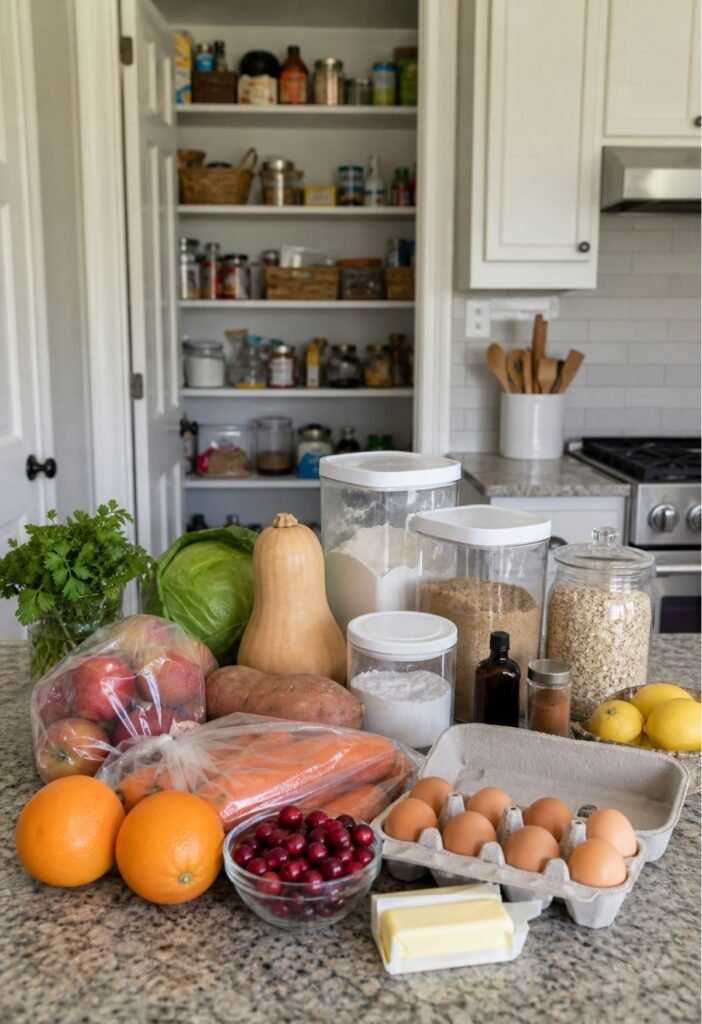
Before making a big holiday grocery list, look at the recipes you plan to prepare and check your pantry for the ingredients you already have. You might discover three unopened bags of chocolate chips, enough flour for several batches of cookies, or canned vegetables you completely forgot about. This simple habit prevents duplicate purchases and gives you a better idea of how much storage space you’ll need. Put the ingredients for your planned meals on one side of the counter and the items you still need to buy on your shopping list. You don’t have to organize the entire pantry in one day. Just knowing what you already own makes holiday pantry organization easier and helps you avoid cramming unnecessary groceries into already crowded shelves.
2. Separate Holiday Ingredients From Everyday Food
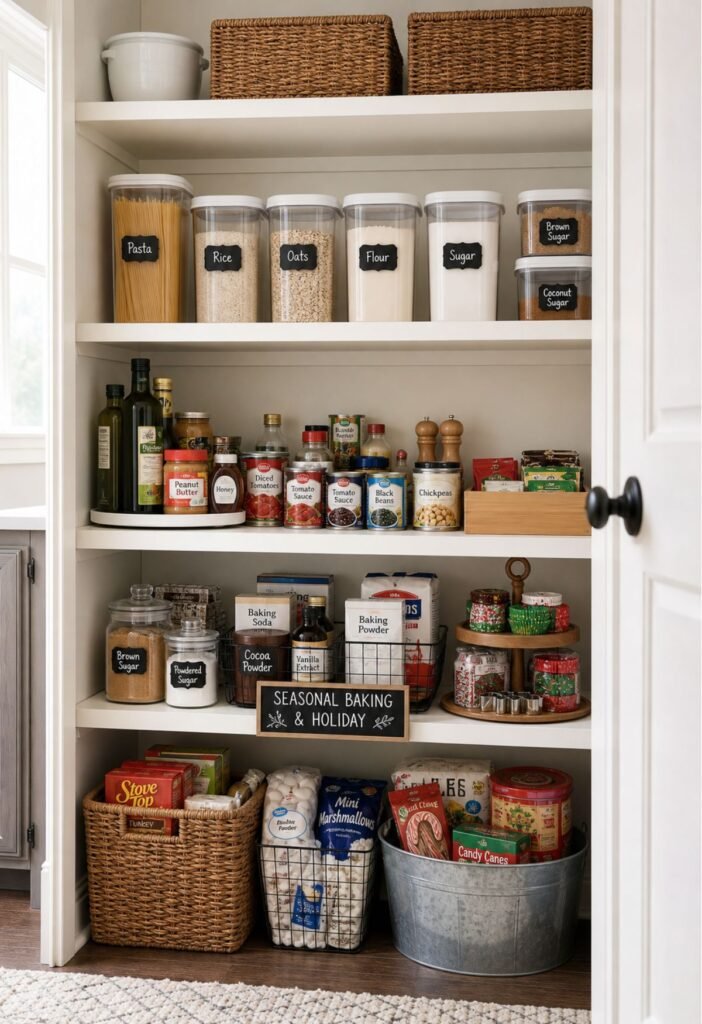
Holiday cooking often requires ingredients that aren’t part of your normal routine. Maybe you’re buying cranberry sauce, special baking chocolate, extra broth, or ingredients for a family recipe you make only once a year. Instead of mixing these items with your everyday food, give them a temporary holiday section. It could be one shelf, a small cupboard, or a reusable basket. Keep your regular breakfast foods and daily cooking staples where they normally belong, so you don’t have to move holiday ingredients every morning. This approach works especially well if several people use the kitchen because everyone can see which supplies are reserved for upcoming meals. Once the celebrations are over, return any remaining ingredients to their usual places or plan meals that use them.
3. Use a Lazy Susan for Hard-to-Reach Items
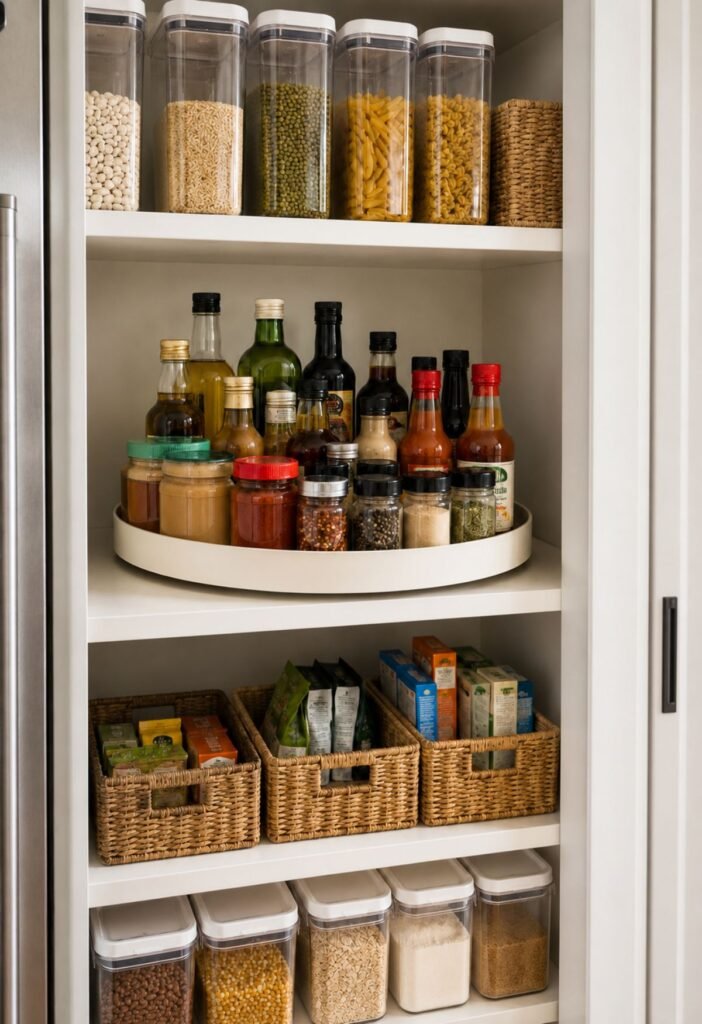
Small bottles and jars often get pushed to the back of pantry shelves, where they stay forgotten until you clean everything out months later. A rotating lazy Susan can make oils, sauces, extracts, and other suitable pantry items easier to reach, especially in deep cabinets or awkward corners. Instead of moving several bottles to find one, simply turn the organizer until the item comes around to the front. When choosing one, measure the shelf and check its weight capacity so bottles remain stable while rotating. Keep heavier glass containers on a secure shelf and avoid overcrowding the turntable. This is one of those pantry storage ideas that can solve a very specific problem without requiring you to reorganize every other part of the kitchen.
4. Create a Separate Spot for Ingredients You Need This Week
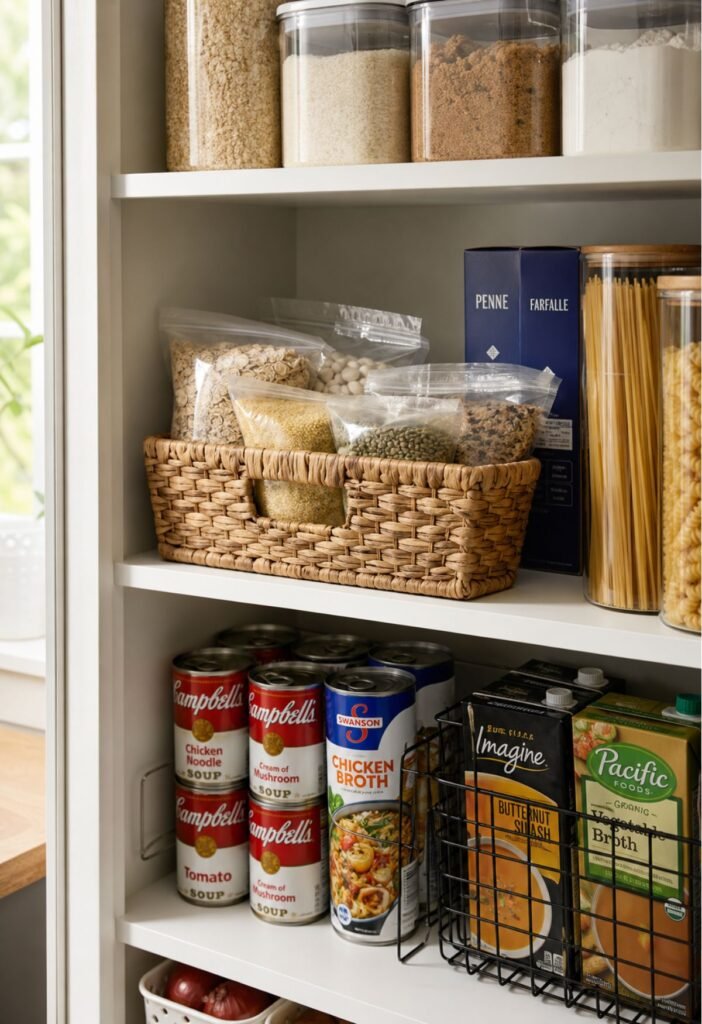
Sometimes your pantry looks messy because ingredients for different meals are mixed together. You’re planning a pie for Saturday, preparing soup on Thursday, and making dinner tonight, but everything is scattered across several shelves. Try using one small basket or a clearly defined shelf for ingredients you expect to use over the next few days. For example, you could keep the dry ingredients for a baking project together, while soup ingredients stay in their usual food categories. Only include pantry-safe items, and store refrigerated ingredients separately. This temporary setup makes it easier to prepare meals without repeatedly searching the pantry. It also gives you a quick reminder of what you planned to cook, which can be helpful when the holiday calendar starts filling up.
5. Keep Baking Ingredients in Containers That Actually Fit
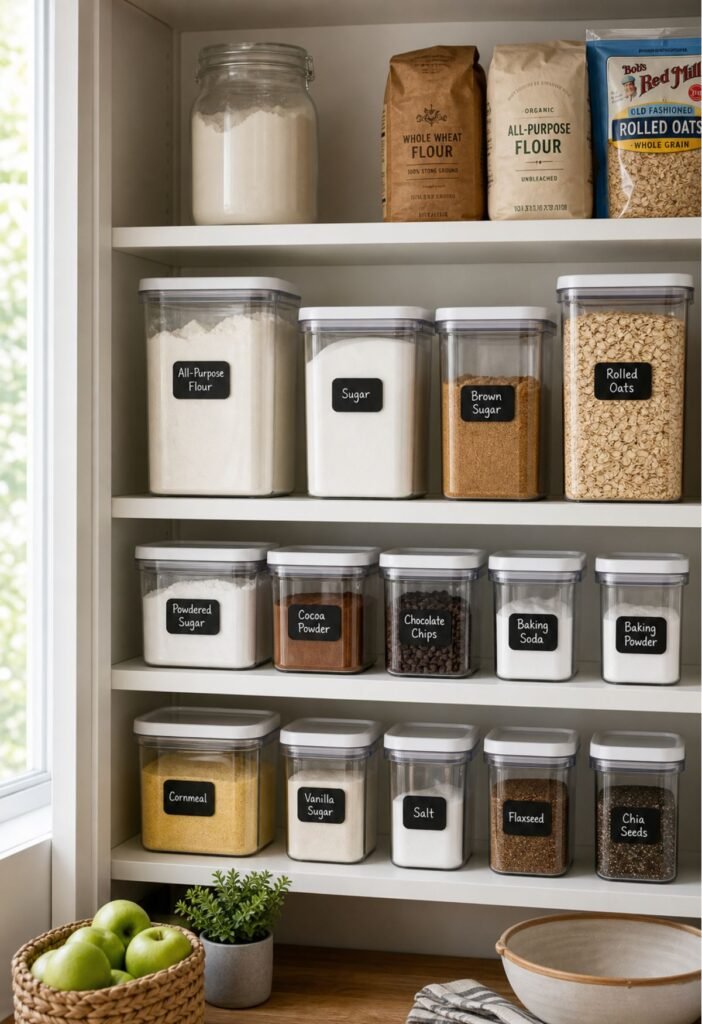
Large containers may look attractive, but they aren’t always the best choice for a small pantry. A tall flour container might leave too little room for the sugar beside it, while a wide jar may waste valuable shelf space. When buying pantry storage containers, think about the shape and quantity of the ingredients you use most often. Slim, stackable containers can work well for some dry goods, while shorter, wider containers may be easier to access on low shelves. You don’t need to transfer every ingredient out of its original package, either. Choose containers for foods that spill easily or that you use frequently, and leave the rest in their packaging if that works better. Always use food-safe containers, keep ingredients dry, and retain important product and allergen information.
6. Give Holiday Snacks Their Own Home
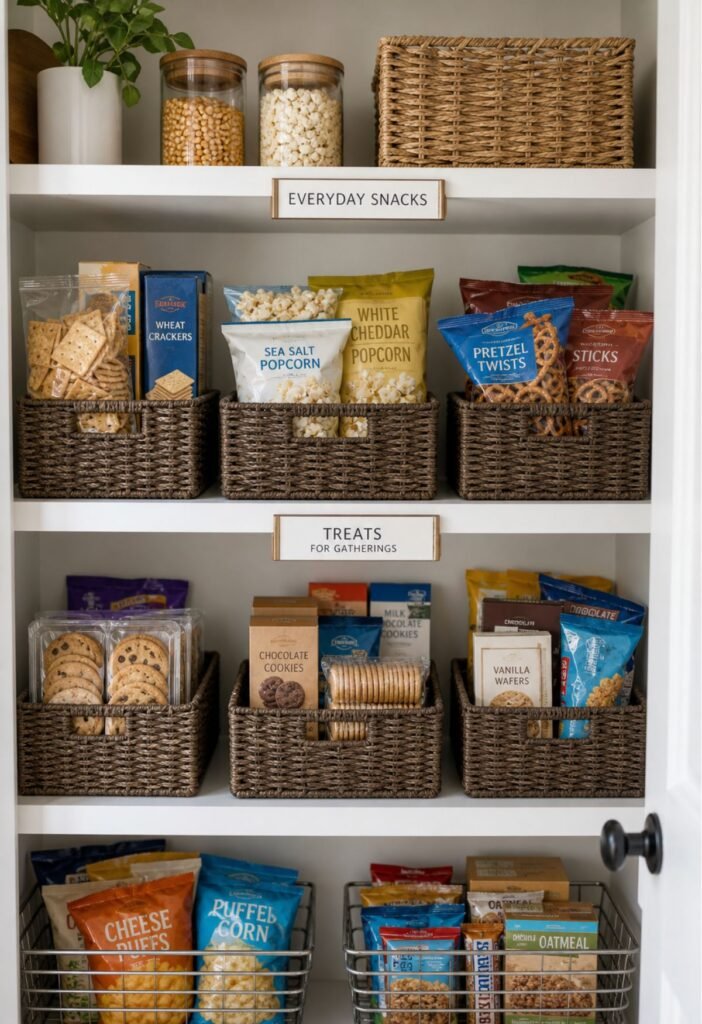
When visitors arrive, people often open the pantry looking for something quick to eat. If snacks are scattered among baking supplies, canned food, and breakfast ingredients, everyone ends up moving things around. A dedicated snack area can make this much easier. Group crackers, popcorn, pretzels, cookies, and individually packaged treats in one section, separating everyday snacks from anything you’re saving for a particular gathering. If your pantry is shared with children, keep suitable snacks on a reachable shelf and store heavier containers or anything unsuitable for children elsewhere. You can use a spare basket or simply arrange the packages in a short row. The idea isn’t to create a picture-perfect snack station. It’s to make grabbing something easy without disturbing the rest of your pantry.
7. Make a Shopping List From Your Actual Pantry Stock
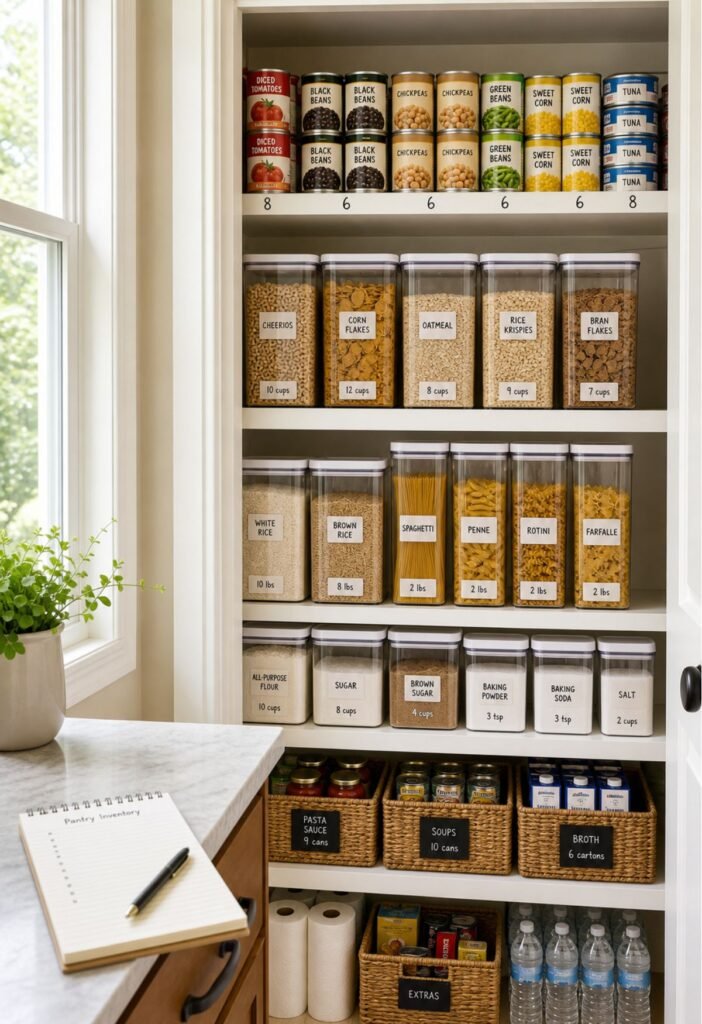
A grocery list written from memory can lead to unnecessary purchases, especially when you’re preparing for several holiday meals at once. Before heading to the store, check your shelves and write down what is genuinely missing. If you already have two cans of pumpkin puree, a full bag of rice, and several packets of gravy mix, there’s no need to buy more unless your planned meals require them. Keep a small notepad nearby or use a note on your phone to record ingredients as they run low. You can also note the quantity you need for a particular recipe. This habit works alongside your pantry organization system because knowing what you own makes it easier to keep everything arranged and prevents extra groceries from filling the little space you’ve worked to create.
8. Add an Under-Shelf Basket for Lightweight Items
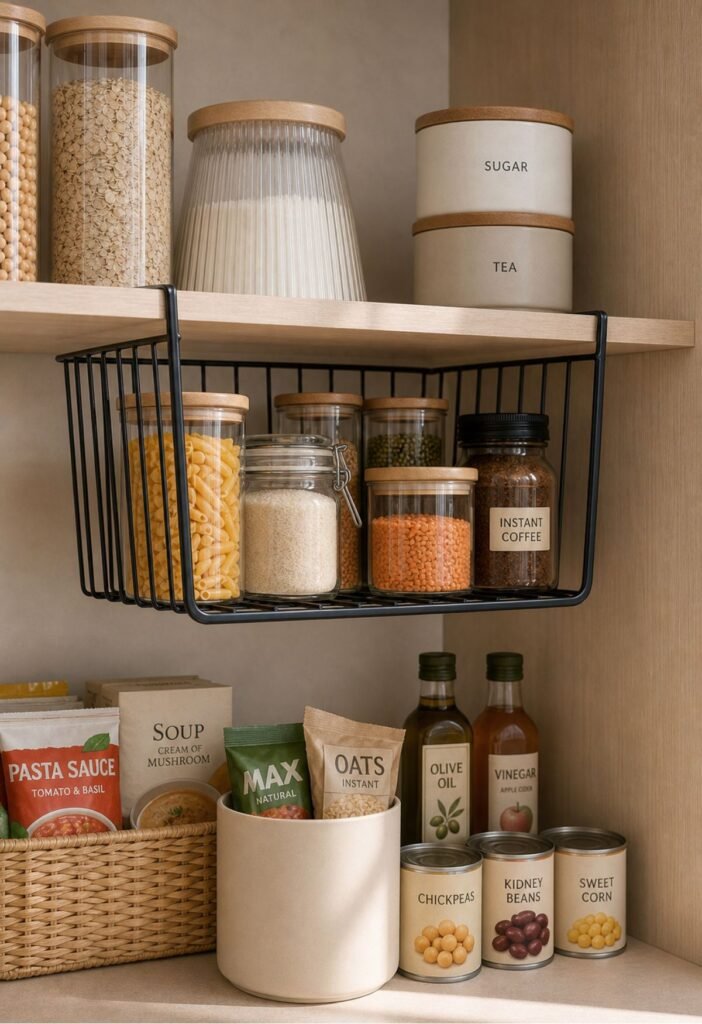
Some pantry shelves have unused space underneath them that could hold a few more items. An under-shelf basket slides onto a suitable shelf and can provide a convenient place for lightweight packets, napkins, or small baking supplies. It’s particularly useful when the shelf below is too tall for the items already stored there. Before buying one, check the shelf thickness, available clearance, and weight limit. Avoid using it for heavy glass jars or anything that could fall when you pull the basket forward. If you have a small pantry, this can be a helpful way to add storage without installing another shelf. Just be careful not to fill every gap with more stuff. A useful organizer should make items easier to access, not turn the pantry into a crowded puzzle.
9. Store Similar Canned Foods Together
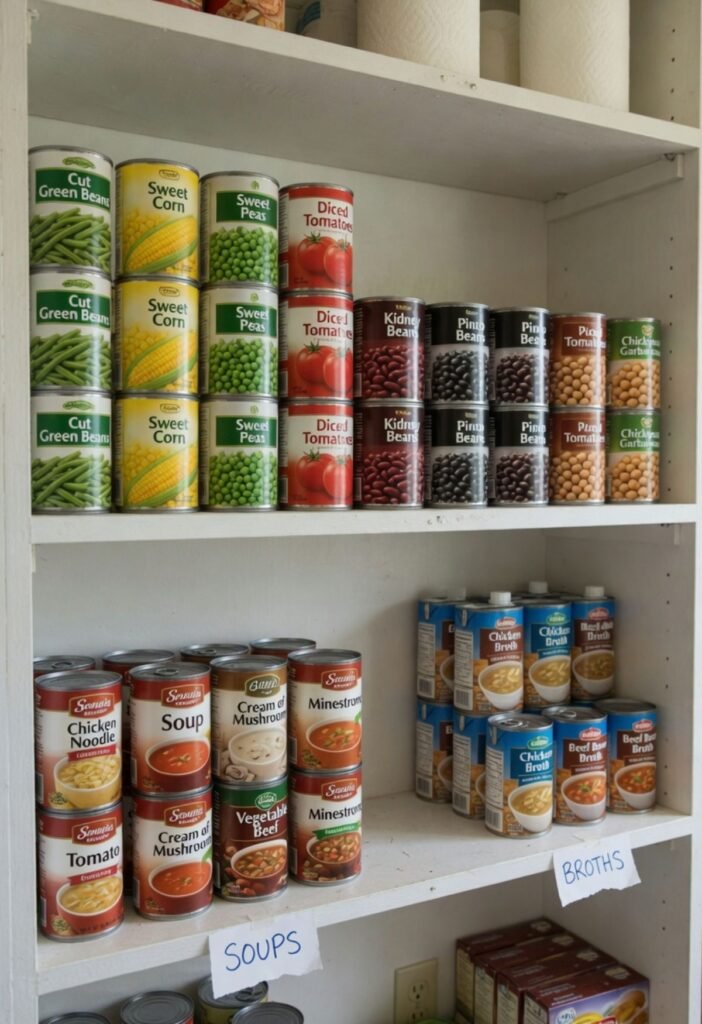
Canned food is easy to stock up on before the holidays, but it can quickly become difficult to track when every can goes wherever there’s room. Arrange vegetables with vegetables, beans with beans, and soups or broths in their own sections. If you have several cans of the same food, place older suitable stock toward the front so you remember to use it first. You can organize them in short rows on a regular shelf instead of buying a special rack. Make sure stacks are stable and that labels remain visible. This small change helps you see your supplies before planning meals and makes it less likely that you will buy another can of green beans while several are already hidden behind other groceries. Good pantry shelf organization should make food easier to find, not just make the shelves look neat.
10. Use a Small Bin for Packets That Keep Falling Over
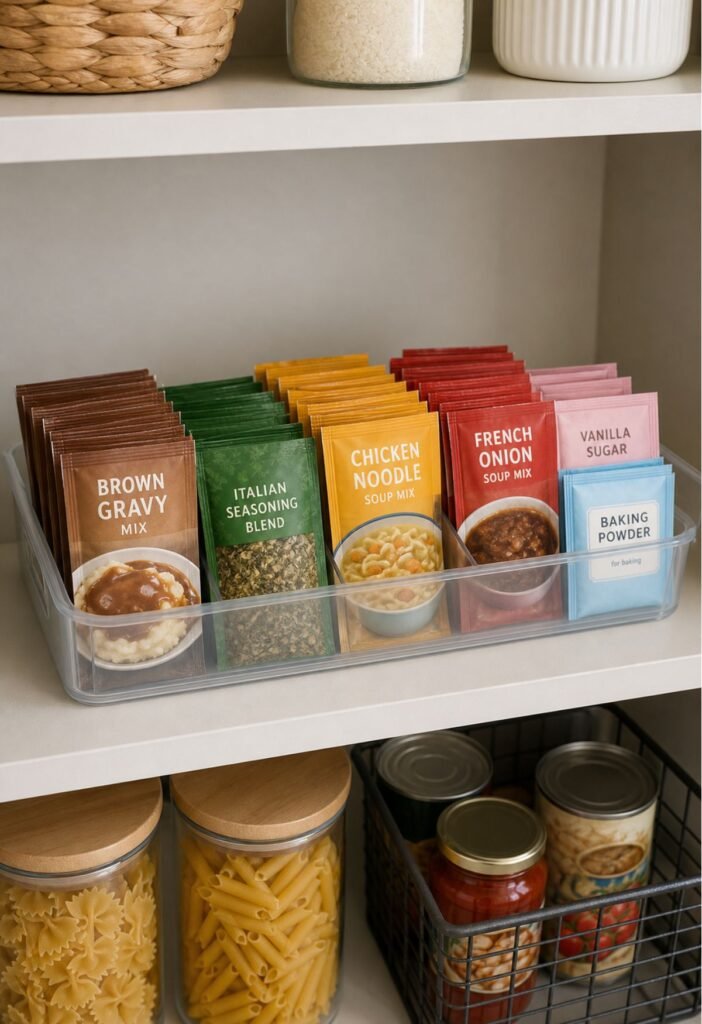
Gravy mixes, seasoning packets, instant soup, drink mixes, and small baking sachets can be surprisingly annoying to store. They slip behind boxes, lean against jars, and fall over whenever you remove one. A shallow open bin keeps these little packages in one place and makes it easier to look through them. If you have several types, use separate bins for baking ingredients and savory meal mixes rather than putting everything together. You can repurpose a clean box you already own or choose a small storage bin designed to fit your shelf. Don’t fill it so tightly that packets become difficult to remove. This simple solution is particularly useful during the holidays, when recipes often call for extra mixes and seasonings that you don’t normally keep in large quantities.
11. Use Shelf Dividers to Stop Stacks From Falling Over
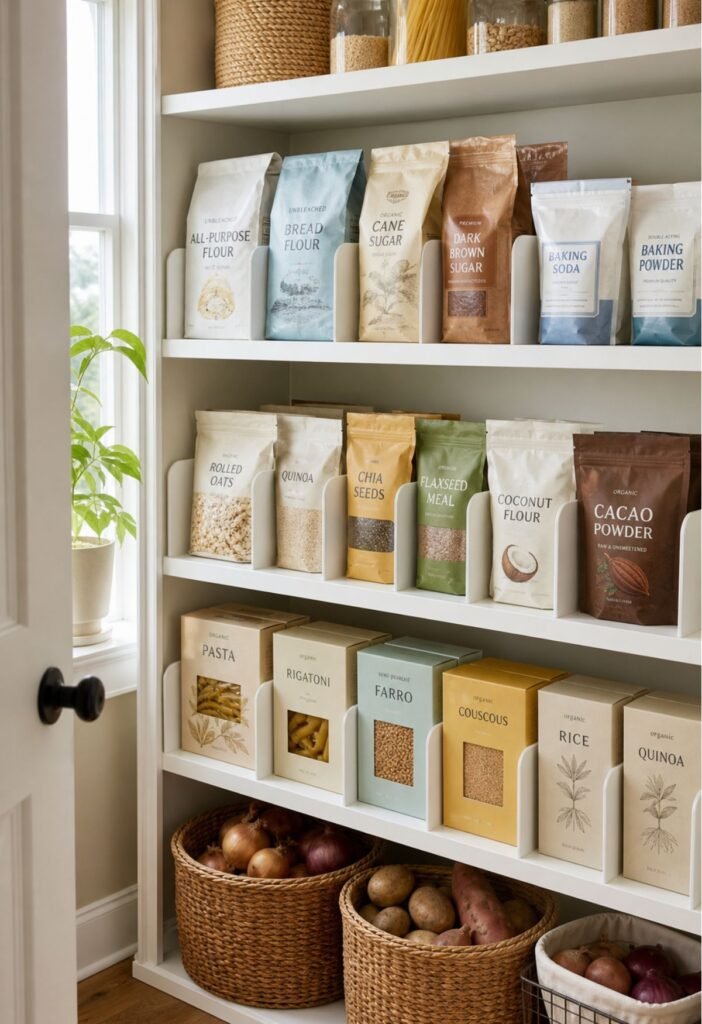
Packets, baking sheets of paper goods, and bags of dry ingredients can slide into each other until the whole shelf becomes difficult to manage. Shelf dividers help create separate spaces and keep items from spreading into neighboring groups. They’re useful for upright bags, boxed foods, and baking supplies that tend to lean when you remove something from the middle. If you shop for pantry organizers on Amazon, measure your shelves first and look for dividers that fit the thickness and depth of your shelving. You don’t need a divider on every shelf, either. Try one in the area that becomes messy most often and see whether it solves the problem. Sometimes one small adjustment works better than buying a whole set of organizers you may not need.
12. Arrange Food According to Package Size
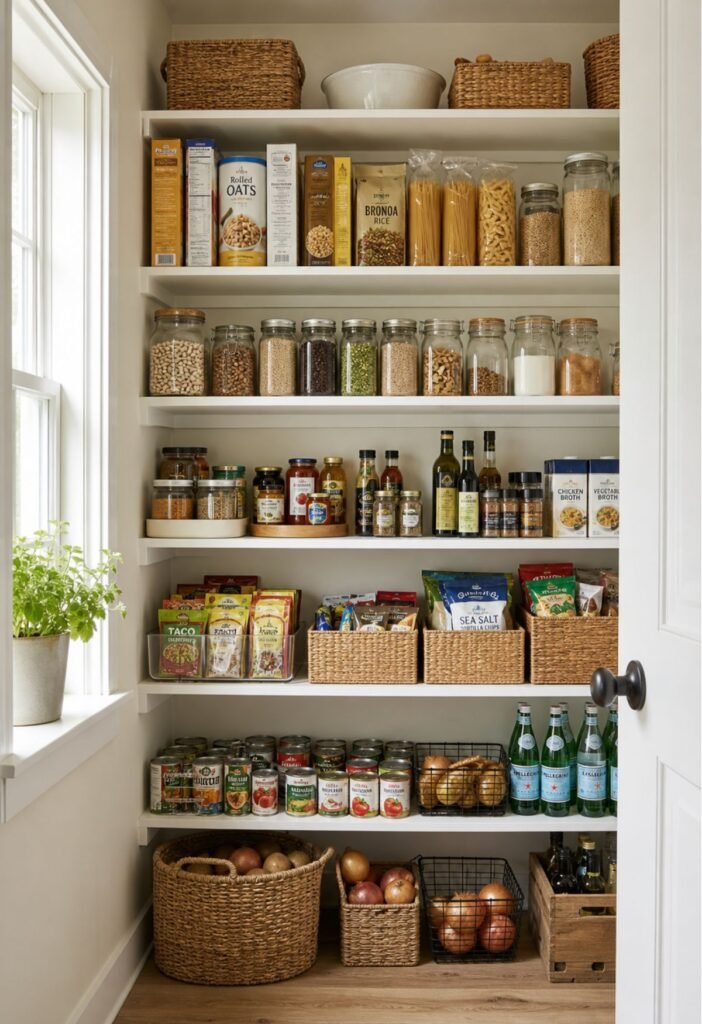
Tall cereal boxes, large bags of flour, short cans, and small jars can create an awkward mix when they’re stored without considering their sizes. Try placing taller packages toward the back or at the ends of shelves, while smaller items stay where you can see and reach them. Keep heavy bags low enough to lift safely, and avoid putting small packets directly behind large packages where they will disappear. If your shelves are adjustable, you may be able to change their height to suit the items you store most often. This doesn’t require a complete pantry makeover. Moving a few things around can create a more practical layout and make your existing space work harder. The best kitchen pantry organization is often about arranging the food you already own rather than purchasing additional equipment.
13. Create a Dedicated Coffee and Hot Chocolate Corner
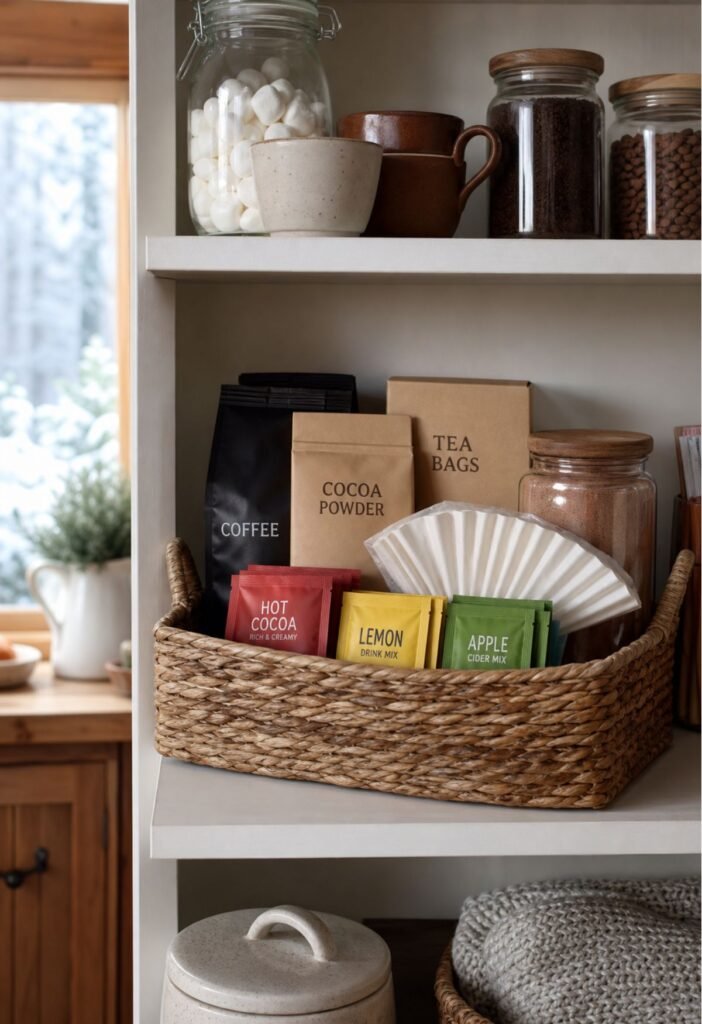
Cold-weather holidays often mean more coffee, tea, hot chocolate, and other warm drinks. If you regularly prepare these at home, keep shelf-stable drink supplies together so you can find everything quickly. You might group coffee filters, tea bags, cocoa powder, marshmallows, and drink mixes in a small section, while mugs and other equipment stay in their usual kitchen storage areas. If your pantry is limited, a single basket may be enough. Check that powdered ingredients remain sealed and dry, especially during humid weather. You can keep seasonal drink supplies together temporarily and return them to their normal places afterward. It’s a simple change, but when guests ask for another cup of coffee or hot chocolate, you won’t need to search through several shelves to find what you need.
14. Use Pull-Out Baskets for Extra Pantry Food
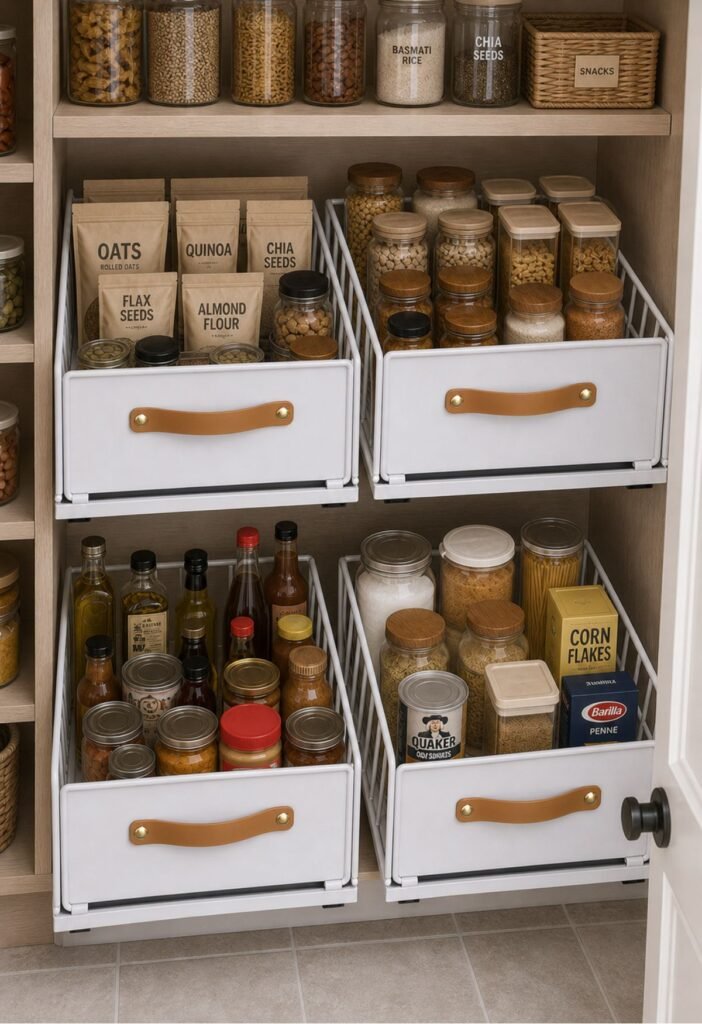
If your family buys several packages of crackers, cereal, pasta, or other pantry staples at once, pull-out baskets can help keep everything organized and easy to reach. Choose baskets that fit the depth and width of your shelves, with handles that make pulling them forward simple. You can use one basket for extra snack packages, another for unopened pasta, and a separate one for backup breakfast foods. This way, you won’t have to move several packages just to find what you need. These pantry storage solutions are especially helpful for deep shelves where food often gets pushed to the back and forgotten. Just avoid overfilling the baskets, so you can pull them out smoothly and see what’s inside without creating another messy storage spot.
15. Keep Frequently Used Condiments Easy to Reach
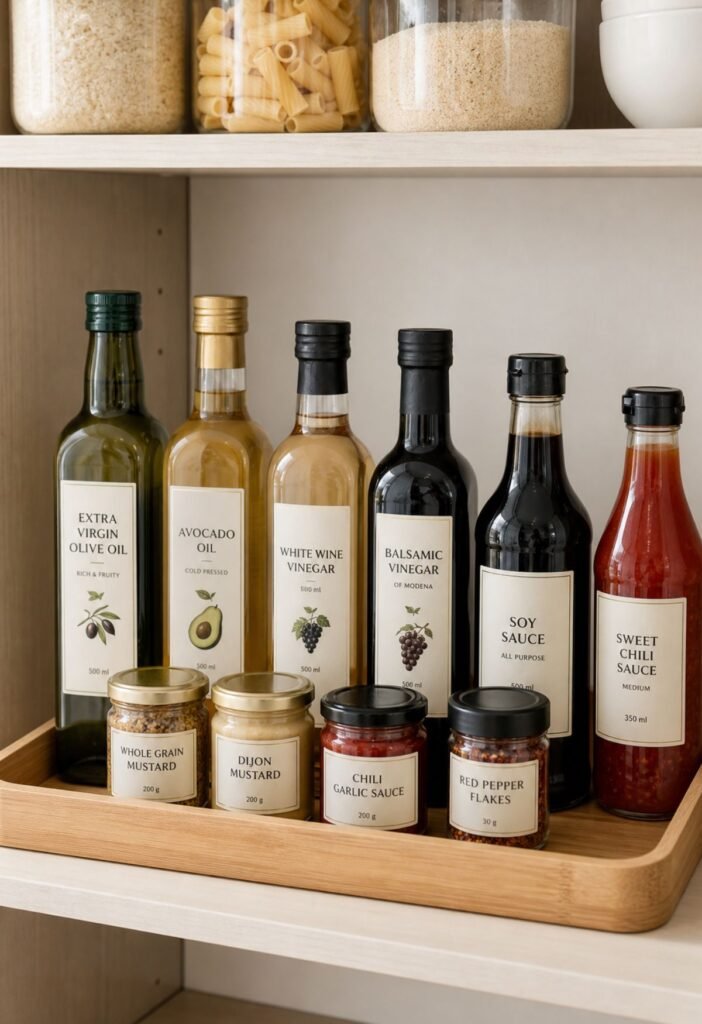
Bottles of cooking oil, vinegar, sauces, and other condiments often collect on pantry shelves, particularly when you’re preparing several different meals. Put the items you use most frequently toward the front and group similar bottles together so you can find them quickly. Check each product’s label to see whether it should be refrigerated after opening; not every condiment belongs in the pantry. Wipe up drips and make sure bottle caps are secure before putting them away. If your shelves are deep, a small tray can help keep suitable bottles together and make spills easier to manage. This is a practical pantry organization tip because it reduces the number of items you need to move while cooking and helps prevent sticky bottles from making an otherwise tidy shelf messy again.
16. Give Specialty Holiday Ingredients a Small Storage Box
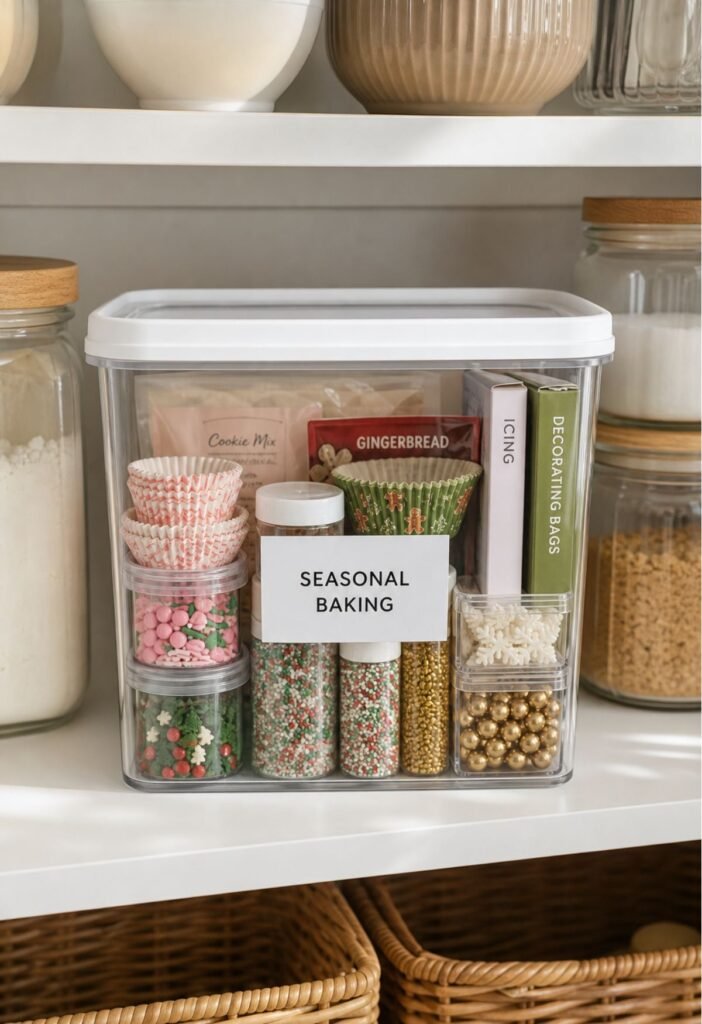
Some holiday ingredients are used only once or twice a year. Think decorative sprinkles, special cake decorations, seasonal cookie cutters that fit in the pantry, or ingredients reserved for a particular family recipe. Instead of spreading these supplies across several shelves, place suitable items together in a small, clearly labeled box. Keep food ingredients sealed in their original packaging or appropriate food-safe containers, and store non-food tools separately when possible. Put the box somewhere accessible but out of the way of daily cooking staples. You can bring it forward when you’re preparing a holiday recipe and return it afterward. This method is particularly helpful if you enjoy baking but don’t want seasonal supplies taking up valuable space throughout the rest of the year.
17. Try a Budget-Friendly Pantry Makeover Before Buying Organizers
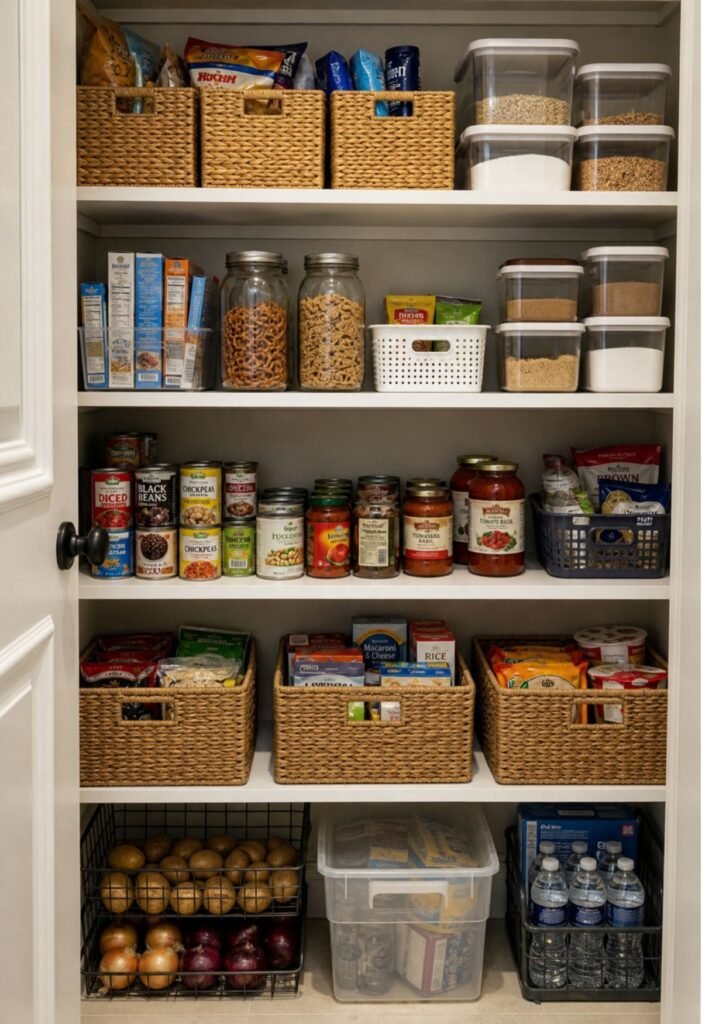
It’s easy to assume that a well-organized pantry requires matching jars, custom shelves, and expensive storage accessories. It doesn’t. Start by grouping your food, removing items you no longer need, and rearranging the shelves to suit your routine. Reuse suitable baskets or sturdy boxes to hold small packets, and label them with simple removable labels if that helps. If one area remains difficult to use, consider buying a single organizer that solves that specific problem. This approach makes pantry organization on a budget much more manageable because you’re not spending money on products before you know what you actually need. A practical setup can be simple and still work beautifully. What matters is whether you can find your food, put groceries away easily, and keep the system going after the first tidy-up.
18. Make the Pantry Easier for Guests and Family Members to Use
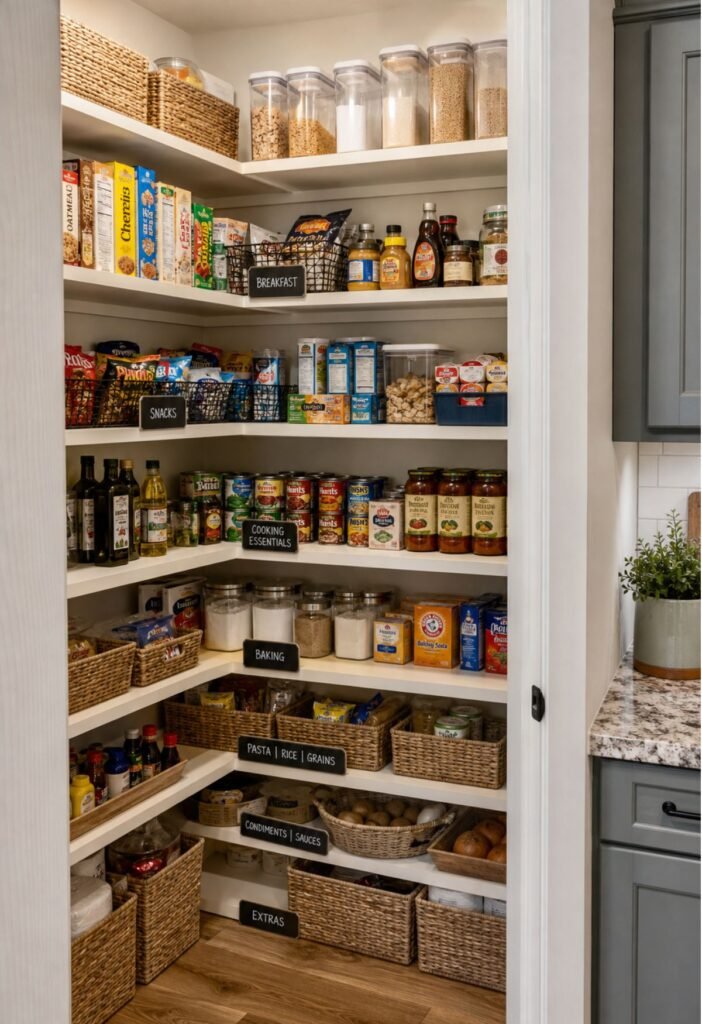
When several people share a kitchen, the pantry can become messy simply because everyone puts things back in a different place. You don’t need complicated labels or strict rules, but a few clear categories can help. Keep common snacks together, group breakfast supplies, and make everyday cooking ingredients easy to recognize. If relatives are staying over for the holidays, let them know where the basics are so they don’t need to ask every time they want cereal or tea. Keep fragile containers and heavier items in stable positions, and make sure frequently used food can be reached safely. These easy pantry organization ideas are less about appearance and more about making the kitchen comfortable for everyone who uses it. A simple system is much more likely to last when the whole household understands it.
19. Use the Pantry Door Only for Suitable Lightweight Storage
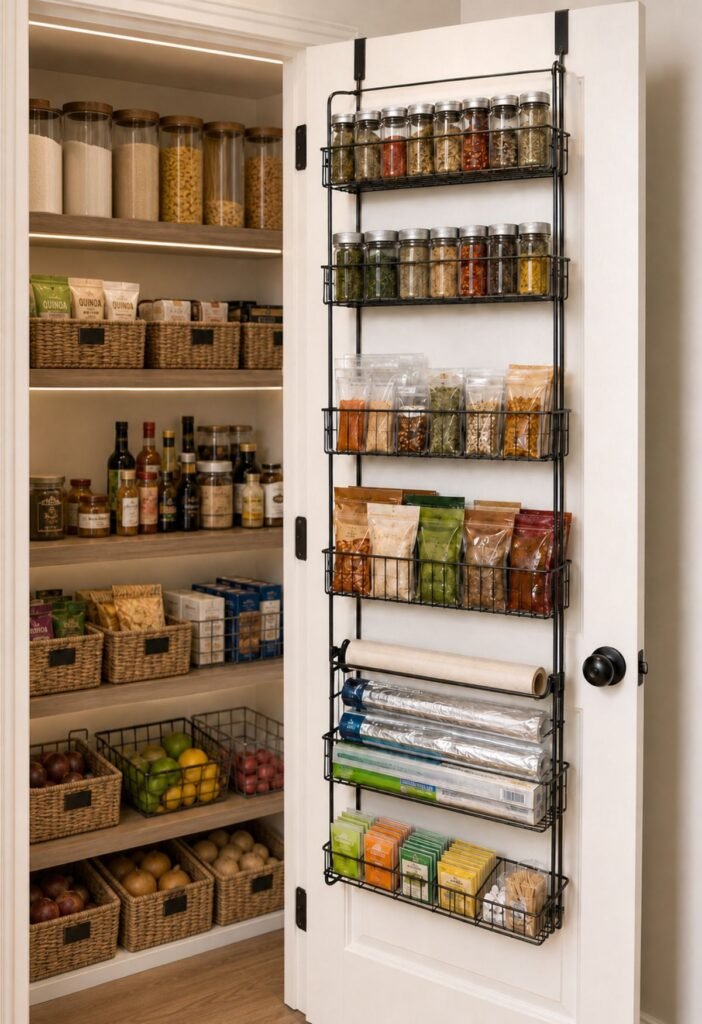
The inside of a pantry door can sometimes provide extra space for lightweight items, especially in a compact kitchen. Depending on the door and available clearance, a suitable over-the-door organizer might hold small seasoning packets, lightweight snack packs, or other items that won’t make the door difficult to close. Measure carefully before purchasing anything, and check whether the organizer could hit shelves or containers when the door moves. Don’t store heavy jars or bulky products in a way that could strain the hinges or create a safety problem. If your pantry door is narrow or already crowded, you may be better off leaving it empty. This idea can help with pantry organization ideas for small spaces, but only when the added storage makes access easier rather than creating another obstacle.
20. Finish Each Grocery Trip With a Quick Reset
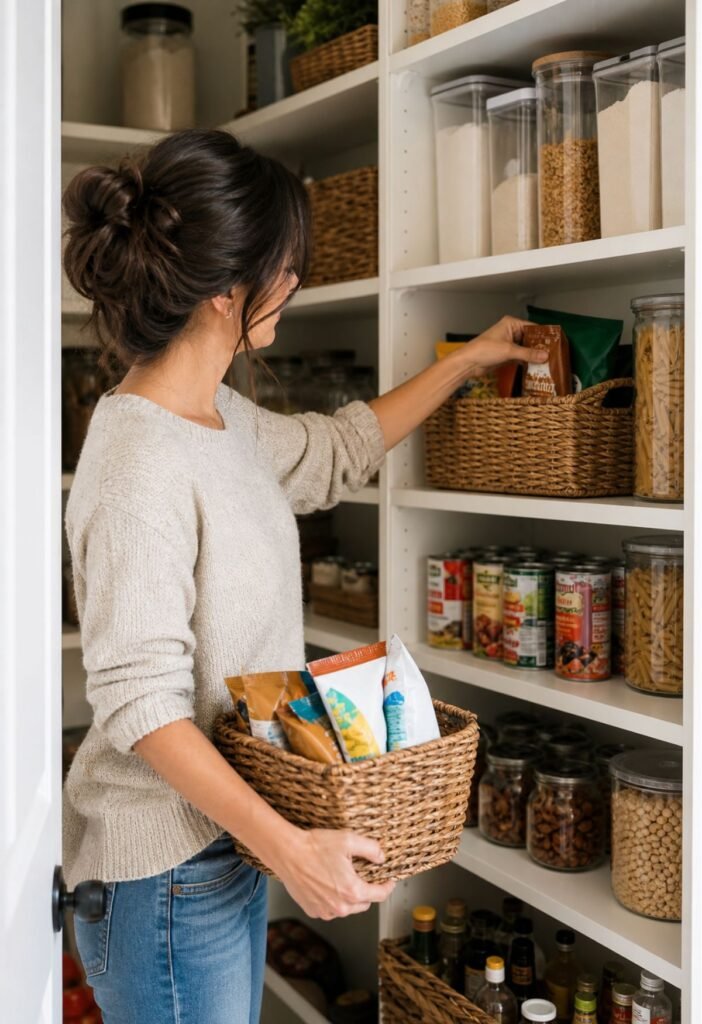
The easiest time to keep a pantry organized is just after you’ve used some food or brought new groceries home. Before putting everything away, check for items that have been left out, return packages to their designated areas, and make sure older products haven’t been pushed to the back. If you’ve bought something you already have, decide where the extra belongs rather than squeezing it into the first available gap. You can also take a quick look at your upcoming meals and move any ingredients you’ll need soon to a convenient spot. It doesn’t have to become a big cleaning session. A few minutes of attention after grocery shopping can prevent the slow buildup of clutter that makes the pantry difficult to use during the holidays.
FAQs
1. How do I organize my pantry for the holiday season?
Start by checking your pantry before buying groceries so you know which ingredients you already have. Group holiday ingredients separately from everyday food, keep snacks and baking supplies in designated areas, and use baskets or bins for small packets. Leave some shelf space available for extra groceries.
2. How can I organize a small pantry for more storage?
Make better use of your existing shelves by grouping similar foods together, arranging packages by size, and using suitable under-shelf baskets or pull-out organizers. You can also use a lazy Susan for hard-to-reach bottles and jars. Measure your available space before buying any storage products.
3. How can I organize my pantry on a budget?
Start by rearranging your existing food supplies and removing items you no longer need. Reuse suitable baskets and sturdy boxes to group small packets, and create simple storage zones for snacks, baking ingredients, and everyday groceries. Buy new organizers only when they solve a specific storage problem.
Final Thoughts
A holiday-ready pantry doesn’t have to look like something from a home magazine. It just needs to work when you’re busy, hungry, and trying to prepare several things at once.
Start with the problems that actually bother you. If you keep buying duplicate ingredients, check your pantry before shopping. If small packets keep falling over, give them a bin. If you never have enough room for extra groceries, leave a little space available before the next big shopping trip.
The best pantry organization ideas are the ones that fit your everyday habits, not just the holiday season. You can use a few simple pantry storage solutions, rearrange your shelves, or try one small organizer if it solves a real problem.
And don’t feel like you need to finish everything today. Make one change, live with it for a few days, and see whether it helps.
A pantry that stays useful is far better than one that looks perfect for a day and becomes frustrating again. Make the space work for you, and you’ll have one less thing to worry about when the holidays get busy.
